
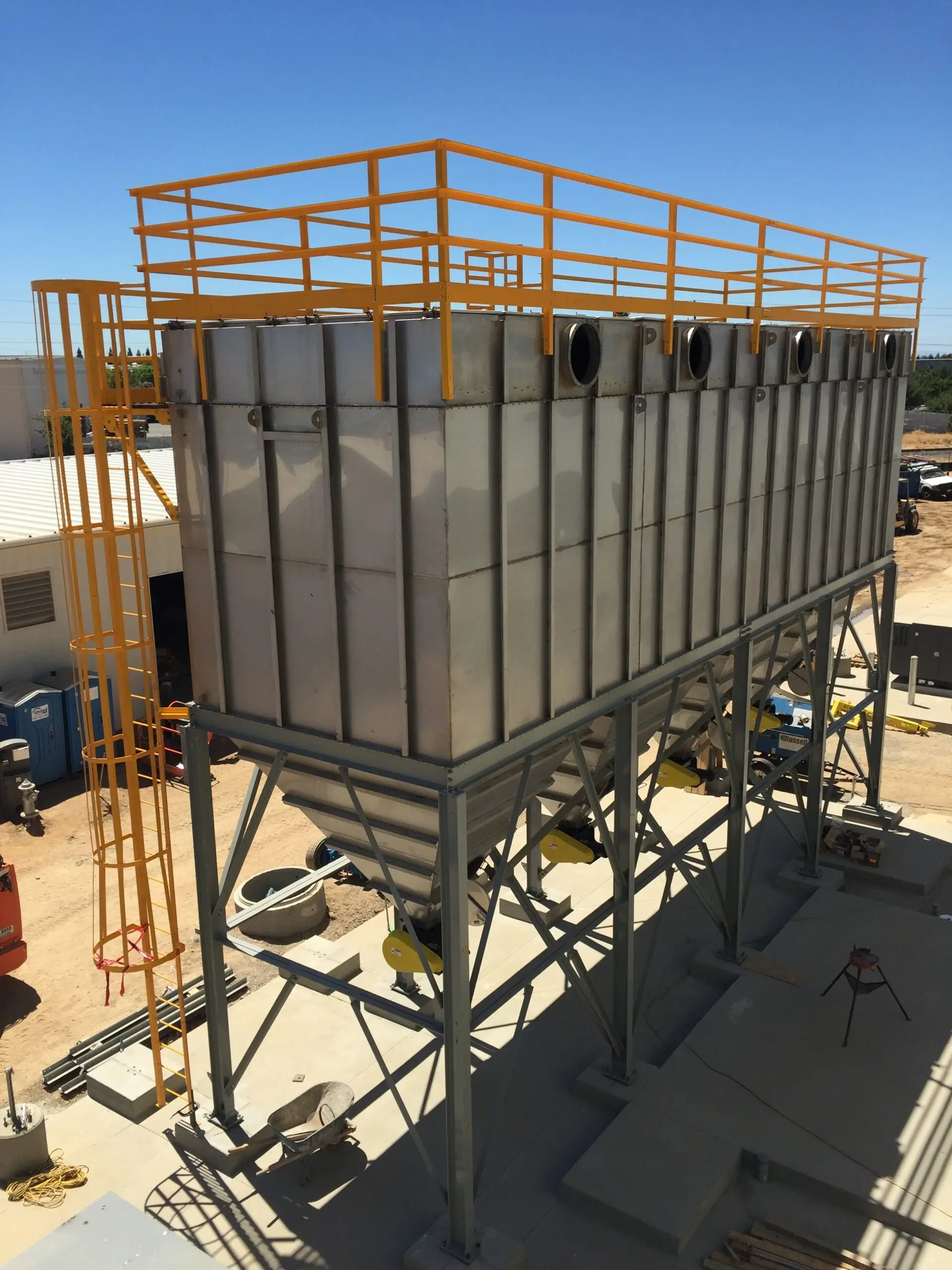
What Is a Baghouse? A Complete Guide to Industrial Baghouse Dust Collectors
Industrial facilities generate dust during nearly every material handling and processing operation. Whether you’re moving powders, grinding metals, handling grain, or processing chemicals, airborne particulate can reduce product quality, create safety concerns, increase maintenance costs, and impact regulatory compliance.
A baghouse, also known as a baghouse dust collector or fabric filter, is one of the most effective solutions for removing dust from industrial air streams. By filtering contaminated air through specially designed fabric filter bags, baghouses routinely achieve collection efficiencies of 99% or greater while supporting cleaner operations, improved product recovery, and long-term equipment reliability.
In this guide, we’ll explain what a baghouse is, how it works, the different types available, where they’re commonly used, and how to determine whether a baghouse is the right dust collection solution for your facility.
What is a Baghouse?
A baghouse is an industrial air pollution control system that removes dust and particulate matter from process air using fabric filter bags. Dust-laden air enters the collector, passes through the filter media, and exits as clean air while the captured dust remains on the surface of the filter bags until it is removed during the cleaning cycle.
Baghouses are commonly used in:
- Food processing
- Chemical manufacturing
- Mining
- Foundries
- Cement production
- Woodworking
- Pharmaceuticals
- Agriculture
- Battery manufacturing
- Recycling operations
Because they can efficiently capture fine particulates while handling large air volumes, baghouses have become one of the most widely used industrial dust collection technologies.
How Does a Baghouse Work?
Although baghouses come in several designs, they all use the same basic filtration process.
1. Dust-Laden Air Enters the Collector
Process air carrying dust particles enters the baghouse through ductwork connected to production equipment.
2. Air Passes Through Filter Bags
As air flows through the fabric filter bags, dust particles become trapped on the filter media surface while clean air continues through the bag.
3. Dust Cake Forms
Over time, a thin layer of dust, called a dust cake, develops on the outside of the filter bags. In many applications, this dust layer actually improves filtration efficiency by capturing even finer particles.
4. Filter Bags Are Cleaned
To maintain airflow, operators must periodically remove the accumulated dust. Depending on the baghouse design, cleaning may occur using:
- Pulse-jet compressed air
- Reverse airflow
- Mechanical shaking
5. Dust Is Collected
The dislodged dust falls into the hopper below the collector where it can be disposed of or recovered for reuse, depending on the application.
Main Components of a Baghouse
While configurations vary by application, most industrial baghouses include the following components:
Filter Bags
The heart of the system. Fabric bags capture airborne particulate while allowing clean air to pass through.
Filter Cages
Metal cages support the filter bags and prevent collapse during operation.
Dirty Air Plenum
The chamber where incoming dust-laden air enters before filtration.
Clean Air Plenum
The section where filtered air collects before being exhausted from the system.
Cleaning System
Pulse-jet valves, reverse-air systems, or mechanical shakers remove accumulated dust from the filter bags.
Hopper
The lower portion of the collector where removed dust accumulates before discharge.
Fan and Ductwork
Move air through the dust collection system and maintain proper airflow.
Cartridge Collectors: Another Type of Dry Dust Collector
Baghouses can also handle smaller particulate and lighter dust loads, but you may want to use a cartridge collector in those cases. Cartridge collectors are another type of dry dust collector that use high-efficiency filter media cartridges instead of bags.
Cartridge collectors typically come in vertical or horizontal cartridge designs. With side cartridge removal, low headroom requirements, and excellent energy savings, cartridge filters can handle many industrial processes to control dust emissions.
The following matrix shows when to choose a cartridge collector over a baghouse.
| Condition | Baghouse | Cartridge |
| High temperature applications | ✓ |
|
| Sticky or wet particulate | ✓ |
|
| Dry dust |
| ✓ |
| Light dust load |
| ✓ |
| Heavy dust load | ✓ |
|
| Small particulate |
| ✓ |
| Large particulate | ✓ |
|
Industries That Commonly Use Baghouses
Baghouses are found across nearly every industrial sector that generates airborne particulate.
Common industries include:
- Cement and concrete production
- Food and ingredient processing
- Pharmaceutical manufacturing
- Chemical processing
- Foundries and metalworking
- Mining and minerals
- Wood products
- Grain handling
- Recycling facilities
- Battery manufacturing
- Industrial processing plants
Because every dust stream behaves differently, baghouse systems are typically engineered around each facility’s specific material characteristics and production requirements.
Benefits of Baghouse Dust Collectors
A properly designed baghouse offers several advantages:
Excellent Dust Collection Efficiency
Many systems achieve filtration efficiencies exceeding 99%, helping facilities maintain cleaner air and reduce emissions.
Reliable Continuous Operation
Modern pulse-jet baghouses clean filter bags while the collector remains in service, minimizing downtime.
Handles Challenging Dust
Baghouses are well suited for abrasive materials, large dust volumes, and elevated operating temperatures.
Supports Regulatory Compliance
Effective particulate collection helps facilities meet workplace safety and environmental requirements.
Product Recovery
In many manufacturing processes, captured material can be recovered and returned to production, reducing waste.
Long Equipment Life
Properly selected filter media and routine maintenance can provide years of dependable operation.
How to Choose the Right Baghouse
No two dust collection applications are exactly alike.
When evaluating a baghouse system, engineers typically consider:
- Dust characteristics
- Particle size distribution
- Moisture content
- Operating temperature
- Required airflow (CFM)
- Air-to-cloth ratio
- Explosion protection requirements
- Filter media selection
- Available installation space
- Maintenance accessibility
Selecting the correct collector requires balancing filtration efficiency, operating costs, maintenance requirements, and long-term system reliability.
Frequently Asked Questions
What is the purpose of a baghouse?
A baghouse removes airborne dust and particulate from industrial process air using fabric filter bags, helping improve air quality, protect equipment, recover valuable product, and support regulatory compliance.
How efficient is a baghouse?
Many properly designed baghouse systems achieve dust collection efficiencies of 99% or greater, depending on the application and filter media.
What is the difference between a baghouse and a dust collector?
A baghouse is a type of dust collector that uses fabric filter bags. Other dust collectors may use cartridges, cyclones, wet scrubbers, or electrostatic precipitation depending on the application.
How often do baghouse filter bags need to be replaced?
Filter bag life varies depending on the dust type, operating temperature, cleaning frequency, and maintenance practices. In many industrial applications, filter bags can last several years before replacement is necessary.
What industries use baghouses?
Baghouses are widely used in food processing, chemical manufacturing, mining, cement production, metalworking, agriculture, recycling, pharmaceuticals, and many other industrial applications.
Can a baghouse handle high-temperature applications?
Yes. With the proper filter media, many baghouse systems are designed to operate in elevated-temperature environments that exceed the capabilities of many cartridge collectors.
Does every facility need the same type of baghouse?
No. The best baghouse depends on the material being collected, airflow requirements, operating conditions, and available space. Most systems are engineered specifically for the application.
Partner with Sly for Industrial Dust Collection Solutions
Choosing the right dust collection system goes beyond selecting equipment—it requires understanding your process, your material, and your long-term operational goals.
For more than 145 years, Sly Inc. has helped manufacturers solve challenging dust collection applications with engineered baghouse systems designed for performance, reliability, and long service life. Whether you’re designing a new system or upgrading an existing collector, our team can help identify the best solution for your operation.
Ready to discuss your application? Contact Sly today to speak with one of our dust collection specialists.