
Blog Highlights
- Explore four types of dry dust collection systems: Pulse Jet, Cartridge, Pulse Clean, and Shaker.
- Understand which dust collector fits your temperature, pressure, and air quality requirements.
- Learn how Sly’s easy-maintenance designs reduce downtime and extend system performance.
- Discover options with explosion protection, custom configurations, and energy efficiency.
- See why Sly is a trusted name in industrial dust collection for over 150 years.
Choosing the Right Dry Filter System
Every facility faces different air quality challenges. From fine particulate to high-temperature exhaust, the right dry filter system helps protect your workers, your equipment, and your compliance record.
Sly Inc. designs and manufactures a range of baghouse and cartridge collectors engineered for reliability and easy maintenance.
Pulse Jet Collectors
Best for: High-performance, continuous-duty operations.
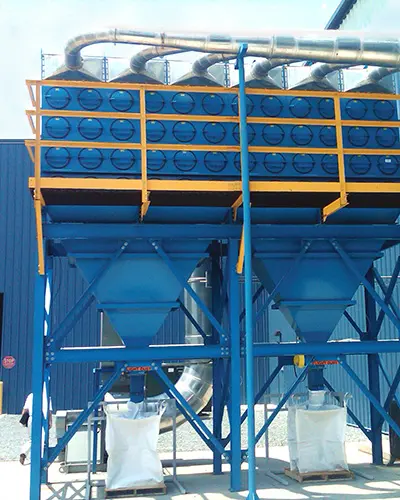
Sly’s TubeJet Pulse Jet Collectors are our most versatile dry filter systems. They’re built for high vacuum applications and environments involving extreme heat, pressure, or corrosive materials.
Key Benefits:
- Tool-free bag changes for fast maintenance
- Explosion protection for added safety
- Custom hopper configurations and temperature sensors
- Internal polishing for cleaner operation and longer system life
Each unit comes standard with timers, air headers, and pulse valves, making it simple to install and even simpler to maintain.
Cartridge Filter Collectors
Best for: Fine particulate filtration and energy efficiency.
The PleatJet II Horizontal Dust Collector uses advanced Opti-Pulse Cartridge Cleaning technology for more complete dust release than conventional systems. Maintenance is completely tool-free with quick-release doors, and multiple configurations make it adaptable across industries.
Why choose this system:
- Uniform dust release improves performance
- Compact design saves space
- Lower energy consumption reduces costs over time
Pulse Clean Collectors
Best for: Compact pollution control with high dust volumes.
The Envelope Filter Collector doubles dust-handling capacity compared to tubular bags while maintaining efficient energy use. Longer bag life and straightforward installation make it a dependable solution for demanding environments.
Shaker Collectors
Best for: Intermittent exhaust systems or smaller operations.
Shaker dust collectors offer a simple, low-maintenance option for facilities that don’t run continuous exhaust. With low filtering velocity, they extend bag life and require only brief interruptions for dust removal.
Ideal for:
- Airflow needs up to 4,000 CFM
- Operating temperatures below 275°F
- Facilities seeking economical, space-saving options
Automatic timers can be added to streamline shaking cycles and reduce manual oversight.
Frequently Asked Questions
1. What is the difference between a baghouse and a cartridge dust collector?
Baghouses use filter bags for larger volumes of dust, while cartridge collectors handle finer particulate and offer compact, energy-efficient performance.
2. How often do I need to replace filter bags or cartridges?
That depends on the dust type and system load, but Sly designs systems for easy, tool-free replacement to minimize downtime.
3. Can dry filter systems handle explosive dust?
Yes. Sly offers explosion protection features on systems like the TubeJet Pulse Jet to ensure compliance and worker safety.
4. What’s the best system for high-temperature applications?
Pulse Jet Collectors are built to withstand extreme temperatures while maintaining reliable filtration.
5. How do I know which system is right for my facility?
Our engineering team will evaluate your material type, temperature, air volume, and regulatory requirements to match you with the most efficient system.
Cleaner Air Starts with Sly
Sly Inc. has been innovating dust collection technology for more than 150 years. Our dry filter systems are trusted across industries for reliability, safety, and ease of maintenance.
Ready to improve air quality and system efficiency?
Request a quote or speak with one of our experts to find the right dry filter system for your operation.
Last updated: October 2025