

Control and Repurpose Deep Fryer Oil Emissions with Sly’s Venturi Wet Scrubber
Solution: Sly LLC installed a Venturi Scrubber and auxiliary equipment. The Venturi Scrubber supplied the performance, regulatory compliance, and durability the client required. This model is designed for effective collection of ultra-one particulates and mists, for more significant recovery and higher efficiencies, with a minimum 20-year lifespan for a long service life.
Problem: A commercial potato frying facility had trouble meeting its emissions standards and had excess waste cooking oil (WCO) collecting around exhaust stacks due to an underperforming wet scrubber, which also required extensive, unscheduled maintenance.
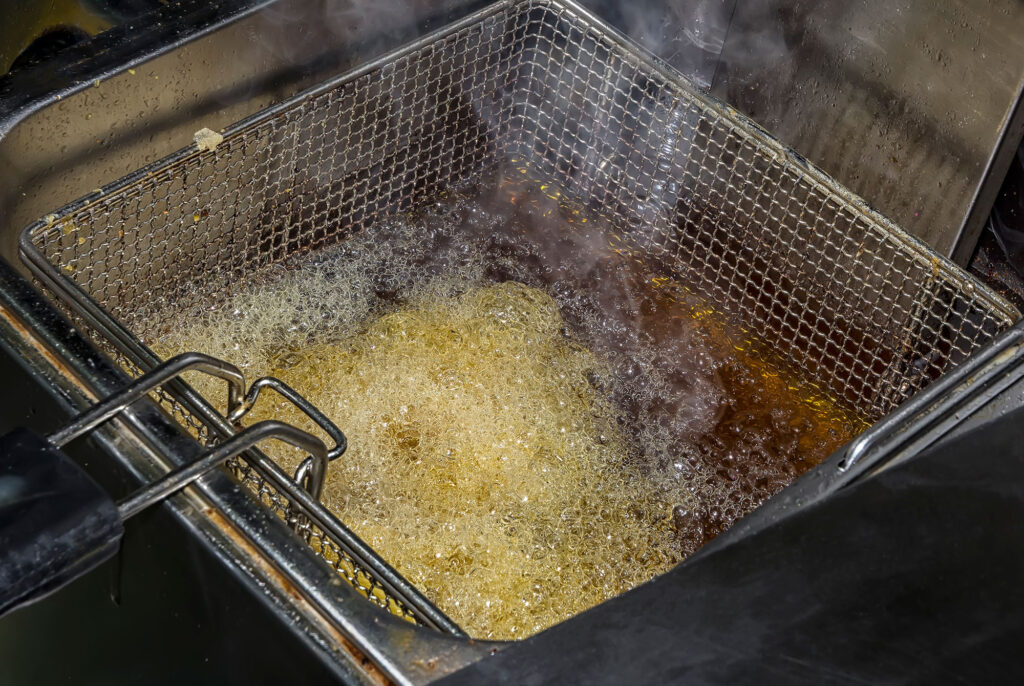
A leading US based frozen food manufacturer operates a processing plant which uses a commercial potato fryer that requires vast amounts of cooking oil. It needed Best Available Control Technology (BACT) equipment to reduce emissions from commercial frying units. The Waste Cooking Oil (WCO) emissions led to oil and grease coating the roof around the exhaust stacks. The food processor contacted Sly LLC to and a suitable replacement for an existing wet scrubber whose performance needed to meet current environmental regulations and was prone to extensive, unscheduled maintenance, a drag on plant performance and potential revenue.
The deep fryers’ emissions consist of particulate matter (oil droplets) and volatile organic compounds (VOCs), which are created as the oil heats up and vaporizes. These emissions and their profiles can change depending on factors such as the oil, temperature, the material being fried, and the deep fryer itself. The Environmental Protection Agency (EPA) regulates VOC emissions under the Clean Air Act, and many individual states also limit businesses to a certain amount of VOC emissions.
After examining emissions characteristics, the performance requirements, and the existing equipment, Sly representatives were able to design a system that met client specifications for greater efficiency, performance, and durability. Sly supplied its No. 7 Venturi Scrubber and auxiliary. The Venturi Scrubber system utilized two critical performance design metrics. The first is precise temperature control, via dilution air, to cool the gas steam before it enters the Venturi to ensure that the grease and oils act like a solid particulate. This helps to optimize removal in the Venturi. The second perimeter is the use of a continuous overflow to purge the fouled water, which consisted of grease, batter, and potato flakes. This design concept helps to prevent these constituents from building up in the system.
Biomass = Biofuels for 2050 Target of Zero Emissions
Around the globe, government bodies and corporations are pushing for net zero emissions by the year 2050. Among the strategies to achieve this goal, the utilization of modern bioenergy sources has increased an average of 7% per year between 2010 and 2021 and is continuing this upward trajectory. Currently, bioenergy fulfills 55% of renewable energy needs and more than 6% of the global energy supply
Further processing can convert numerous varieties of biomass into bioenergy. Waste cooking oil sourced from vegetable oils and animal fats represents one type of biomass. Rendering companies collect the oil and purify it to transform it into animal feed, supplements or an alternative energy source, biodiesel, that can power vehicles in place of traditional diesel fuel.
Biomass conversion of this type protects the environment, reduces the amount of sewage impacting municipalities, helps protect human health and reduces our dependence on foreign oil. Recycling efforts extend beyond cars and trucks to aviation fuel as well. As one example, a few years ago, the Dallas-Fort Worth International Airport started collecting nearly 32,000 pounds of WCO each month, which is refined into Sustainable Aviation Fuel (SAF).
Industrial food processing operations ship tanker loads of commercial frying oil for use. This opens the vast potential for a secondary income stream selling the waste products for further refinement into biofuels.
Features of the Venturi Scrubber
The Venturi scrubber uses the differential between high-velocity gases and free-flowing water to create droplets which entrap contaminants, then holding them in suspension, to deliver them as a highly concentrated slurry. This model is particularly effective at collecting ultra- ne particulates and mists compared to other gas cleaning methods for more significant recovery and higher efficiencies.
In this specific case study, Sly included a final high-efficiency mist eliminator installed just before the stack to remove condensed water vapor and grease aerosols. The adjustable throat on the Venturi Scrubber is a standard feature to help optimize performance. Overall, the system uses less energy than other competitive options and requires little maintenance.
- The design conditions required for the system included:
- Design gas flow rate: 20,000 acfm
- Inlet Temperature: 220 Deg F
- Differential pressure: 20″ WC
- Particulate removal efficiency: 99+%
- Liquid recirculation rate: 180 gpm
- Type 304LSS materials of construction
Sly’s innovative design was installed and exceeded the environmental requirements the facility needed, with extremely low emission rates. It helped reduce maintenance to its bi-annual scheduled downtimes.
The Sly Venturi Scrubber cleans process gas streams, removing oils, dust, and other particulates. This enables companies to recycle collected materials back into the process stream, depending on the value, remove particles, or repurpose them. Other Sly equipment can provide reliable dust collection to capture airborne particles that result from biomass drying and processing. In this case, WCO can realize a new purpose as a component of biofuels or other goods.
Sly manufactures a full line of industrial nuisance and process collectors for collectors and bag houses, cartridge collectors, wet scrubbers for particulate collection, retractable dustless bulk loading spouts, and aftermarket parts for their own and competitors’ dust collectors. Through synergy with sister companies such as Carrier Vibrating Equipment, Heyl Patterson, and S. Howes, Sly can offer companies a comprehensive line of equipment supporting biomass drying and processing applications. For complete system design and delivery from a sole source, contact Sly today.