

Explosion Protection Expertise
Helping You Integrate Explosion Protection Solutions.
Combustible Dust
Combustible dust protection is an important consideration for many dust collection applications. Sly has the expertise to help you meet NFPA standards and the intent of the OSHA Combustible Dust National Emphasis Program initiated in 2008.
Sly’s dust collection manufacturers and professionals can assist you in all aspects of this challenging issue of explosion protection. As a trusted advisor to our customers, Sly will offer advice and make recommendations when combustible concerns are presented to us. As a custom manufacturer, each dust collection and explosion protection solution is designed according to its specific application and process conditions.
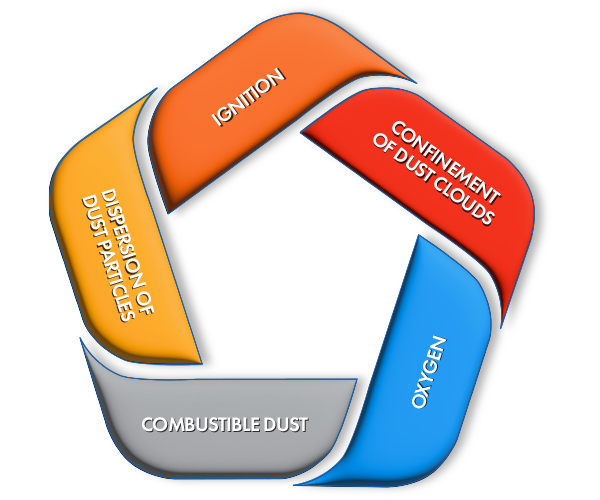
Dust Explosion Pentagon
Dust can be combustible. Without proper mitigation strategies and explosion protection designs, industrial dust collectors can be a likely place for explosions to occur.
Sly’s Combustible Dust Protection Solutions
Sly has excellent working relationships with all major combustible dust protection equipment suppliers. We can help our customers integrate explosion protection solutions for our dust collectors within a safe overall installation.
- How to determine if your dust is combustible
- Hazard analysis by an explosion protection expert to evaluate system design and identify housekeeping requirements and required documentation.
- Documented design calculations
- Pred values calculated and documented
- Determination of fireball length and clearances required for worker safety
- Requirements for vent dusts on indoor applications
- Gas-tight construction for inert gas closed-loop systems
- Explosion vents designed in accordance with NFPA-68-2013
- Suppression systems designed in accordance with NFPA-69-2014
- Isolation solutions for dusty air inlets, clean air outlets, and dust discharge
- Flameless venting or quench tubes
- Grounded and/or conductive filter bags
- External grounding of housings
- Sprinkler systems
- Electrical enclosures and wiring to meet NFPA-70-2014 (NEC)
Request a Quote
Featured Resources
Dry Dust Collection Handbook
Preventing product contamination and ensuring worker safety are paramount to manufacturing or processing operations. Growing awareness of the impact of air pollution on health and the environment is driving demand for dust collection systems, so it’s critical for you to know how to navigate industry regulations and solve key challenges.

Dry Dust Collector Buyer’s Guide
Demand for dust collection systems is being fueled by growing consumer awareness of the impact of air pollution on health and the environment combined with rapid urbanization and industrialization. A variety of dry dust collection options are available on the market, some of which are optimized for specific industries or applications.
How to Design a Dust Collection System
Dust collection systems are essential for many industrial facilities to adhere to clean air standards set by the Federal Clean Air Act, OSHA, and MSHA. Companies also benefit, as clean air results in healthier employees, which increases productivity and employee morale. Designing a system requires a comprehensive look at all of the application’s specifics and environmental requirements.