
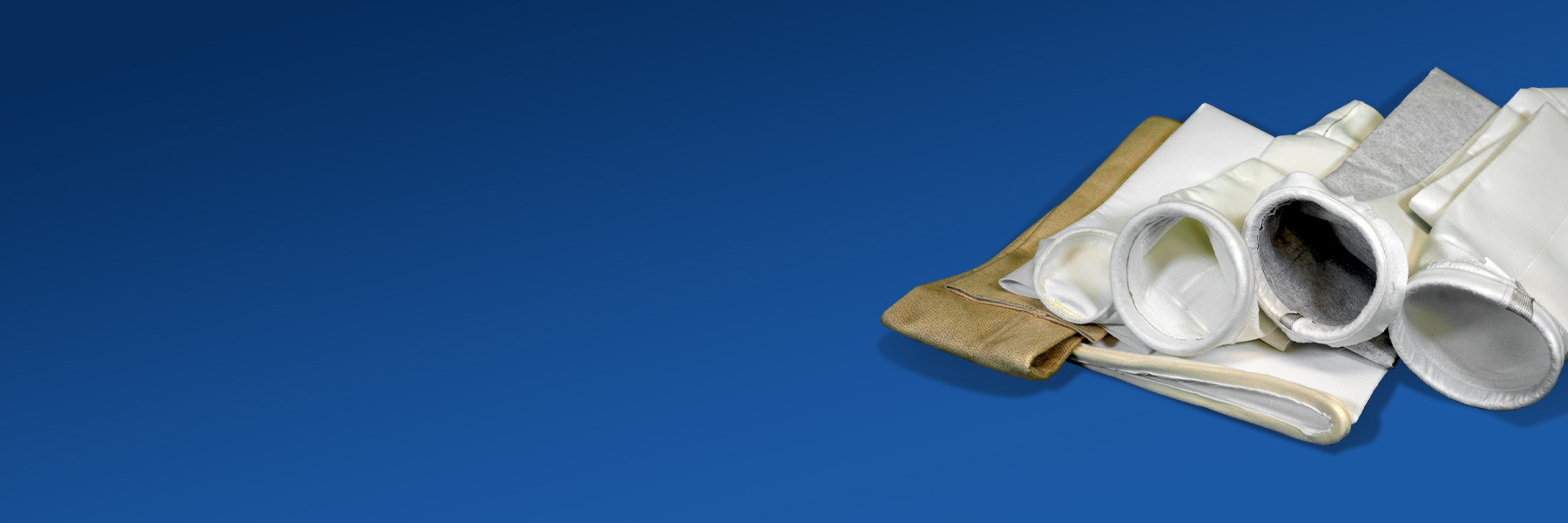
Nylon (NYL)
For Highly Abrasive Dust Applications.
Nylon Felt: Applications, Properties, and Finishes
Nylon Felt (NYL) Normal maximum continuous operating temperature is 250°F. Nylon felt is typically used for highly abrasive dust applications. It has good resistance to alkalis under most conditions, but most mineral oxides cause degradation and partial decomposition. High concentrations and temperatures may cause complete degradation. This media holds up to common organic solvents very well.

Download our Fabric Filter Properties Guide to compare fabric characteristics to choose the best for your application.

Download our Chemical Compatibility Guide to compare fabric choice suitability for different chemicals.
NYLON FELT OPTIONS
Available Finishes for Nylon Felt:
- Plain (PL), Glazed (GL)
- Singed (SI), SlyHE (High efficiency)
- ST-01 (Oleophobic), ST-04 (Code 9), ST-12 (SS Fibers)
Available Weights for Nylon Felt:
- Call for availability
Nylon Felt Common Finishes
Singed Polyester (SINYL) – The felt is singed on the dust cake side for improved cake release. Most common type of filter media used in modern baghouses. The process involves exposing the surface fibers to an open flame that melts back the loose fiber ends to which dust particles could adhere.
Glazed Polyester (GLNYL) – This process involves running the felt through two heated rollers to melt back the loose fiber ends improving the cake release. The process can also compress the felt to smooth the surface, further improving the cake release.
The information provided on this website is intended as a guide for filter bag applications. SLY, LLC. makes no guarantee about the performance or results you can expect from the application of this information unless provided in writing from our staff.