

Carbon Black
Ensure Your Environment is Safe When Processing Carbon Black With a Proven Solution.
Carbon Black Dust Collection
Carbon black is a form of finely divided carbon particles produced through the pyrolysis of petroleum product residues or natural gas using controlled process conditions and high temperatures. Carbon black is primarily used as a reinforcing agent in rubber-compounding products such as tires, belts, and hoses.
Overall, it improves a material’s physical and mechanical properties by reinforcing a product’s strength, durability, and resistance to abrasion. Another form of refined carbon is utilized in power plants to aid in absorbing toxic gases.
The carbon black industry has experienced significant growth in recent years, with a projected CAGR of 5.0% through at least 2032. This is being driven by the expanding automotive sector, increasing demand for high-quality tires, and the rising consumption of industrial rubber products worldwide. Additionally, the surge in manufacturing plastics, printing inks, and paints has further propelled the demand for carbon black.

Overcome the Most Challenging Industrial Dust Environments
Carbon Black Dust Collectors
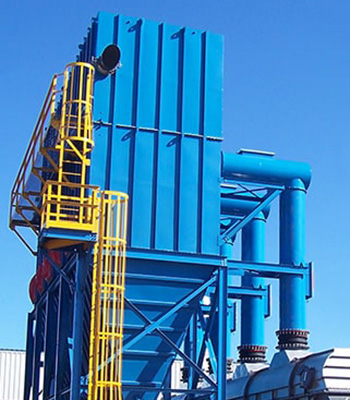
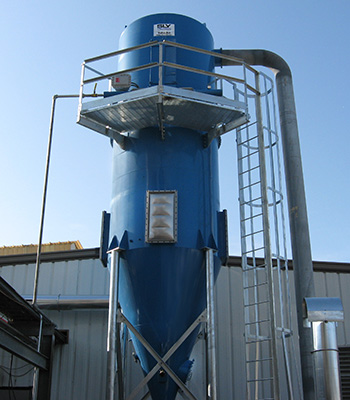
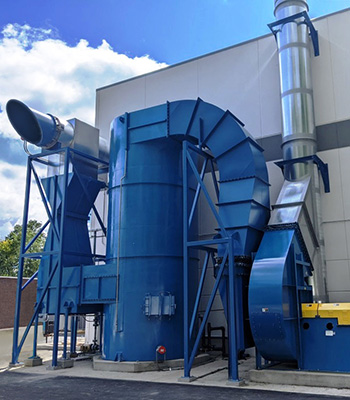


We offer a complete line of dust collection equipment, including bag houses and media selection for the filters, wet scrubbers, cyclones, and loading spouts. Our technicians can draw upon industry knowledge gathered during our 150-year history of designing and building proprietary systems for companies of all types. Ensure your environment is safe when processing carbon black with a proven solution.
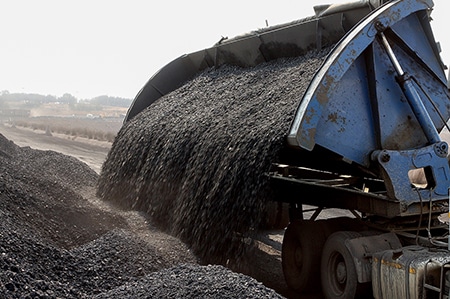

The newest industry development involves reclaimed carbon removed from old tires. Reclaimed carbon black can substitute for virgin carbon black in some applications. However, it presents processing challenges due to its lightweight and less-than-fluid nature.
Carbon black dust requires not one but multiple dust collection or suppression systems because dust can be generated at any point during material handling, from the point of entry through processing, mixing, and shipping. Carbon black is a product, not a nuisance dust, and therefore is recycled into the production stream. While not a nuisance, it poses several hazards that necessitate proper control. These include:
- Occupational health risks: The workers involved in its production or handling are at risk of respiratory problems due to the fine nature of carbon black particles. Prolonged exposure or inhalation of its dust can lead to lung diseases.
- Fire and Explosion Hazards: Carbon black dust is combustible and can create explosive atmospheres if accumulated in sufficient quantities. If it catches fire, it emits noxious gases. The fire hazard in manufacturing facilities and storage areas necessitates appropriate safety measures and dust control systems with explosion-proof venting and/or suppression systems that meet NFPA standards.
- Environmental Impact: Carbon black dust can be released into the atmosphere during processing, transportation, or storage, contributing to air pollution. It can also contaminate soil and water bodies if not appropriately managed, adversely affecting ecosystems.
Celebrating 150 Years
Sly offers customers decades of supplying dust collection systems within the carbon black industry. Due to this depth of knowledge, Sly has provided dust collection solutions for the emerging interests involved with reclaimed carbon black.
Every dust collection system manufactured by Sly is a custom build considering the different design elements, such as media selection for the bag filters and the air-to-cloth ratio vs. interstitial velocity, to name a few. Essential features for consideration when designing a baghouse for carbon black dust would include:
- Meeting emissions standards
- Enhancing worker and plant safety
- Improving air quality
Carbon black is a versatile material widely used in various industries, mainly rubber and pigment applications. The proper dust collection system can help companies meet environmental and occupational safety regulations while meeting goals for a return on investment by recapturing a process medium. When facing challenges related to dust generation during processing, work with an industry expert for advanced dust control systems.
Case Studies & White Papers
Featured Resources
Emerging from the Haze: Overcoming the Most Challenging Industrial Dust Environments
In this white paper, you’ll learn why being flexible is the great solution for dust collection:
- The Importance of Dust Control
- The Confluence of Kst and Pmax for Combustibility
- Conducting a Dust Hazard Analysis
- Case Study on a Customized Solution