

Blog
Restez informé des dernières actualités concernant Sly.
Filtrer les catégories du blog
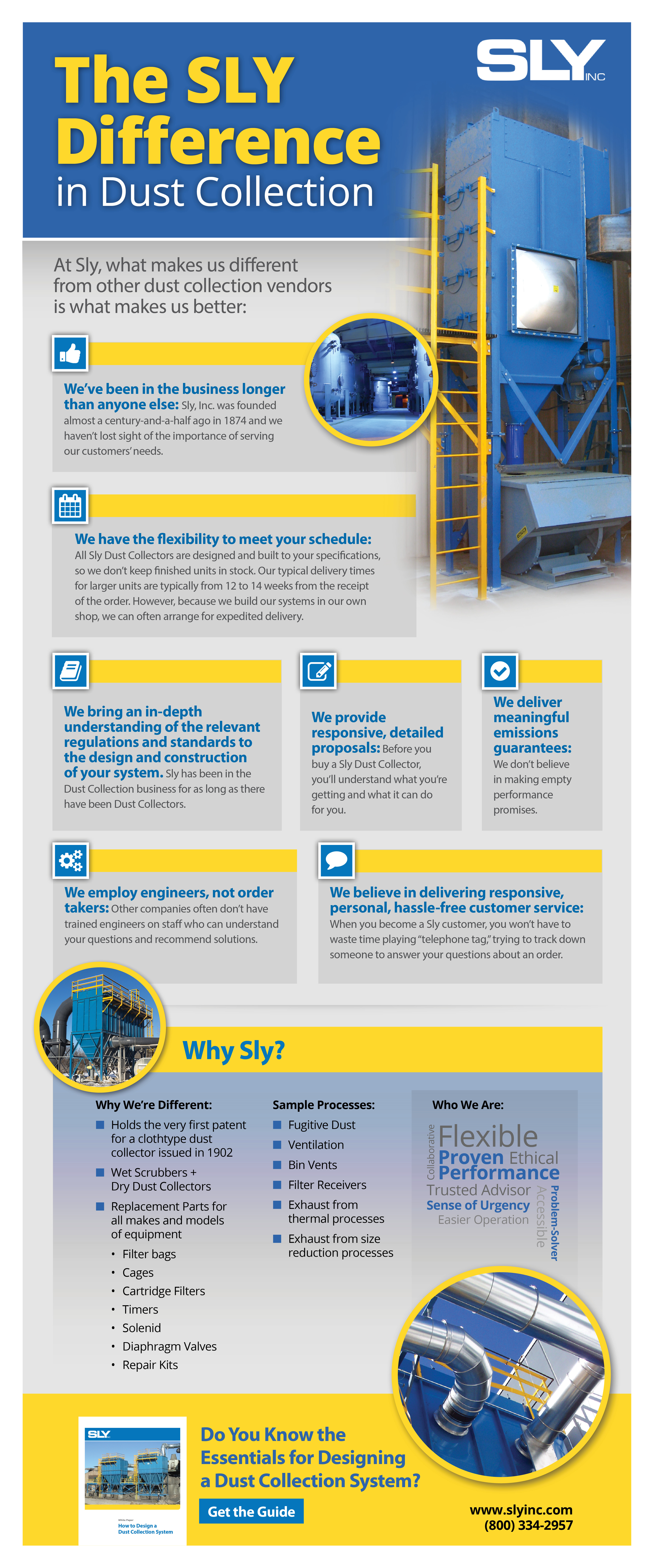
[Infographic] The Sly Difference in Dust Collection
At Sly, what makes us different from other dust collection vendors is what makes us better. We work closely with our customers to design and maintain their dust collection systems. With nearly 150 years of experience, we’re your trusted resource for dust collection solutions. But what does that all mean?…
Comment démarrer correctement votre dépoussiéreur ou votre filtre à manches
Learning the right way to start up your dust collector or bag house will optimize performance, help initial blinding, and extend the life of your dust collector’s new filters. Let’s review the proper start-up procedures for new dust collectors and for those with new filter bags installed. Keep in mind…

Guide de poche : Principes de base des épurateurs humides
Wet scrubbers come in a variety of types and shapes, but all are basically designed to remove gases/vapors and particulates from the exhaust from process equipment like furnaces, dryers, mixers, bagging stations, etc. They’re often the best option for handling combustible particulates because they can eliminate the dust’s explosion potential….
Cleaning Up with Cartridge Filters: Dust Collector Filter Cleaning
For indoor dry dust collector installations, cartridge dust collectors are often the best option for applications where the dust is dry and can flow freely, such as in chemical processing, minerals, blasting, welding, plasma cutting, dry powder handling, and metal finishing. But cartridge filters, just like baghouse filters, demand regular…

Qu'est-ce qu'un épurateur humide ?
A wet scrubber is a mechanical system that removes pollutants from an air stream by bringing it in contact with a scrubbing liquid, most often water. Wet scrubbers are generally the only single air pollution control device that can remove both particulates and gases/vapors. They are highly efficient at capturing…

Systèmes humides ou secs : lequel est le mieux adapté à vos besoins en matière de contrôle de la pollution atmosphérique ?
Air pollution control systems fall into two main categories: wet scrubbers and dry dust collectors (including both baghouses and cartridge collectors). Each type has its place, but determining which is best for a particular application does require careful consideration. Wet Scrubber Advantages and Disadvantages Nowhere are wet scrubbers more necessary…

Quand faut-il utiliser un sac filtrant à membrane en ePTFE ?
Any operation that uses a baghouse dust collection system must weigh the advantages and disadvantages of the numerous baghouse filter options available in the market today. The type of filter bag you’ll need to operate at maximum effectiveness and efficiency will depend on the baghouse design, the type of dust…

Infographie : Comment concevoir un système de dépoussiérage
Dust collection systems are essential in many industrial facilities for adhering to clean air standards. Do you know the basics of designing a dust collection system? The dust collection process can be broken down into three main steps: Conveying it to the collector Containing or capturing the dust Collecting the…

Prévention des explosions de poussière : éléments à prendre en compte pour évaluer vos options en matière de contrôle de la poussière
Industrial dust explosions don’t “just happen.” Too many manufacturers don’t consider the combustibility of the dust their processes may be creating when weighing their dust control options. Solid, noncombustible items can be turned into combustible dusts during manufacturing processes like food prep (grinding, transferring or mixing ingredients), machining (sawing, grinding,…