

Cenizas volantes
Sly ofrece décadas de experiencia en el diseño y la construcción de sistemas de recogida de polvo para recoger cenizas volantes con fines industriales.
¿Qué es la ceniza volante?
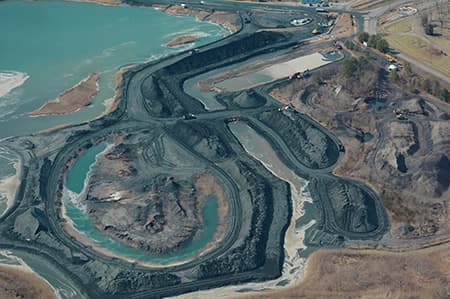
Las cenizas volantes son un polvo fino similar al vidrio que se recupera de la generación de energía eléctrica a partir del carbón. Las centrales eléctricas estadounidenses producen millones de toneladas de cenizas volantes al año, que a menudo se desechan en vertederos o estanques. Las empresas están obligadas por las regulaciones de la Agencia de Protección Ambiental (EPA) a limpiar o vaciar estos estanques y reducir los residuos de cenizas volantes.
Los usos comerciales pueden hacer que la recuperación de cenizas volantes sea una empresa rentable. Por ejemplo, las cenizas volantes se utilizan como sustituto directo del cemento Portland en la producción de hormigón o pueden sustituir al yeso extraído en los paneles de yeso. El primer uso documentado en la producción de cemento se remonta a la década de 1940, cuando se utilizó hormigón con cenizas volantes para un aliviadero de túnel en la presa Hoover.
When applied in controlled, measured amounts, fly ash also shows excellent potential as a soil amendment to improve soil health and crop performance.

Eliminar las conjeturas a la hora de comprar un colector de polvo
Equipo recomendado para el procesamiento de cenizas volantes
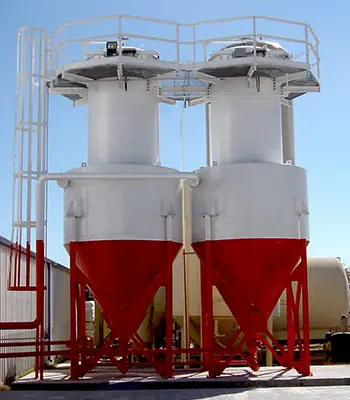
Colectores de polvo seco CTR
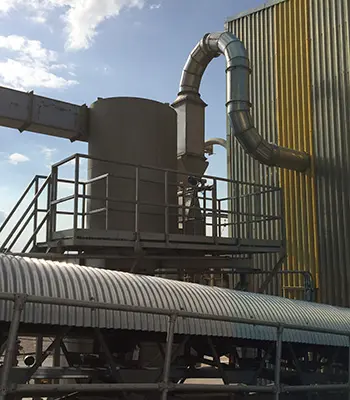
Depuradores húmedos Venturi
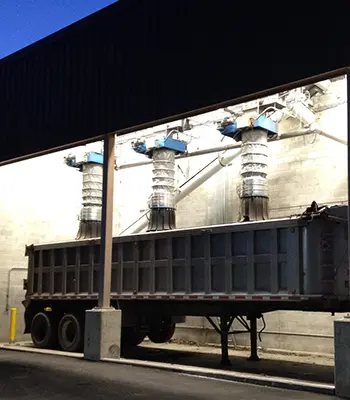
Boquillas de carga industriales

Debido a su valor comercial, las cenizas volantes representan un proceso de recuperación de polvo más que una molestia de eliminación de polvo. Este aspecto y sus características únicas influyen en el tipo de equipo de recolección de polvo y el diseño del sistema para lograr un rendimiento y una recuperación óptimos.
Consideraciones para el diseño de un sistema de recogida de polvo de cenizas volantes
Las cenizas volantes extraídas de los estanques de residuos deben secarse para eliminar su contenido de humedad y hacerlas aptas para uso industrial. Los equipos habituales para este fin suelen incluir un calcinador rotatorio o un secador instantáneo.
Calcination subjects fly ash to elevated temperatures, typically between 700°C and 1000°C (approximately 1290°F to 1830°F), to dry and thermally stabilize the material. Fly ash is often collected directly from the calciner or dryer. In fact, 90-95% of the product being processed in the calciner enters the dust collector, creating a heavy dust load. This dust contains high levels of silicon dioxide and aluminum oxide, the main compounds found in coal-bearing rock, making it very abrasive. In addition, fly ash is extremely fine and tends to fluidize during transfer, creating a material-handling challenge that must be considered during system design.
Las consideraciones clave al diseñar un sistema de recolección de polvo para cenizas volantes incluyen:
- Volumen o carga de polvo
- Características del polvo
- Flujo de aire
- Temperatura
- Abrasividad
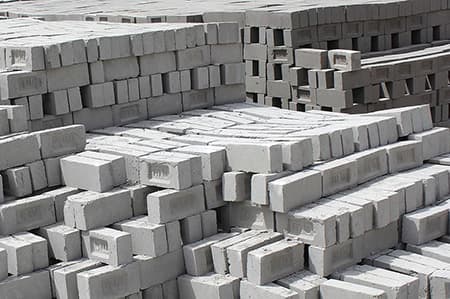
The calciner processes thousands of pounds of material, resulting in a high dust loading, with several hundred grains per cubic foot of material being conveyed in every cubic foot of air. The dust loading, along with its flow characteristics, affects the collection process.
In addition, design considerations must account for the higher temperatures used in the calciner and reduce the air temperature before it enters the baghouse to at least 350°F. This temperature drop helps engineers design a more cost-effective system and affects components such as baghouse filter material selection.
Because of the abrasive nature of the dust, all contact points, such as the hopper, inlet, and airlocks, must be constructed of abrasive-resistant materials such as high-carbon alloy steel. A cyclone may also be installed as a prefilter to extract most of the material and help extend the baghouse’s lifespan.
Sly offers customers decades of experience designing and building dust collection systems for industrial fly ash applications. Dust collection systems are fabricated for durability and optimized for fly ash recovery. Each fly ash collection system is custom-designed and manufactured, from inlet placement to sizing for air volume and air-to-cloth ratio. Customers appreciate the depth of knowledge an industry expert can provide to ensure reliable product recovery.
We provide a complete line of dust collection equipment, including cyclones, baghouses and filters (in a wide range of media), wet scrubbers, and loading spouts. During our 150-year history, our expert engineers have worked with companies of all types to supply equipment and solutions for their unique applications. Maintain worker safety, meet emissions standards, and enjoy near-complete fly ash recovery with a dust collection system from Sly.
Solicite un presupuesto para su proyecto de recuperación de cenizas volantes hoy mismo.
Recursos destacados
Eliminar las conjeturas a la hora de comprar un colector de polvo
Nuestra nueva Guía del comprador de colectores de polvo secos puede ayudarle a navegar por el complejo proceso de especificación y compra una vez que haya decidido que un colector de polvo o un filtro de mangas es la solución adecuada para sus necesidades en materia de contaminación atmosférica.