
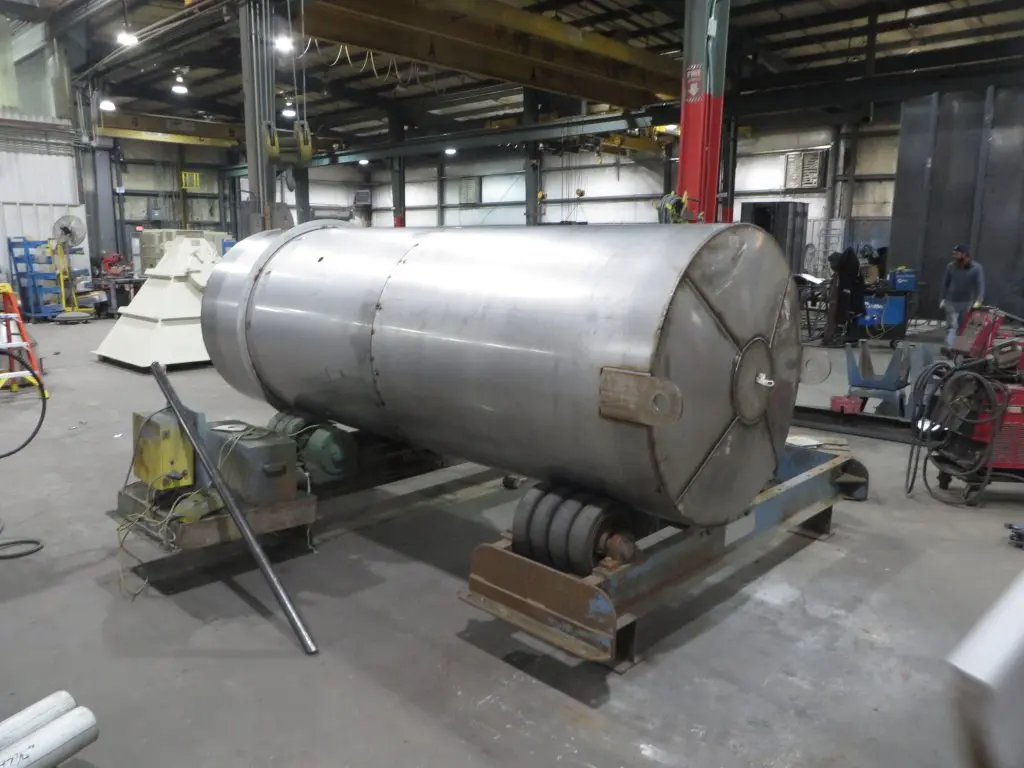
Custom Venturi Scrubber for Spray Dryer Emissions in Food Flavoring Production
Industry: Food Processing
Application
Spray dryer exhaust particulate control for food flavorings
Case Study Highlights
Captured fine, water-soluble flavoring particles (~5 microns) from spray dryer exhaust
Achieved approximately 99% particulate removal efficiency
Solved reliability issues caused by sticky, hygroscopic dust in dry collectors
Replaced ineffective cyclone and baghouse performance with a custom venturi scrubber solution
Provided stable airflow with a 10 in. water gauge pressure drop


The Challenge:
Capturing Fine, Sticky Flavoring Particles
A food manufacturing facility producing powdered flavorings relied on a spray drying process that generated extremely fine particulate emissions. These particles were water-soluble, hygroscopic, and sticky, making them difficult to capture with traditional dry dust collection equipment.
The plant initially attempted to control emissions using a cyclone and baghouse system. However, the fine particles often bypassed the cyclone, causing operational issues in the baghouse.
Common problems included:
- Filter blinding from sticky particulate
- Increased maintenance and downtime
- Reduced collection efficiency
- Overloading of the dry dust collection system
The facility needed a solution capable of reliably capturing fine flavoring particles while maintaining stable operation with the spray dryer.
The Solution:
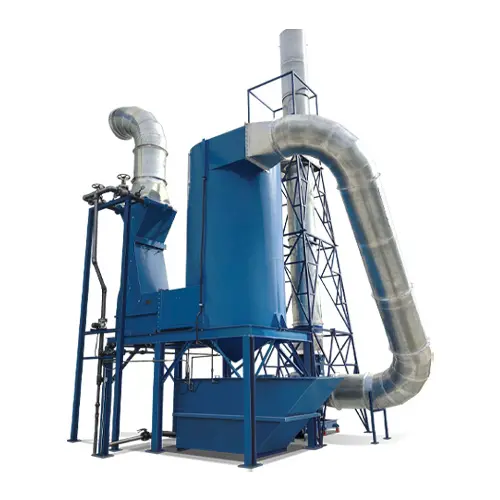
A Custom Venturi Scrubber System
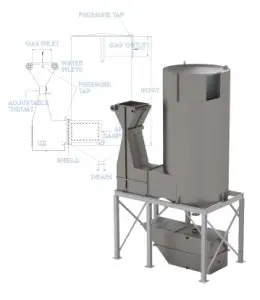
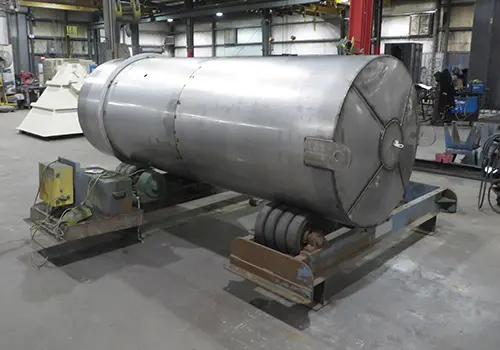
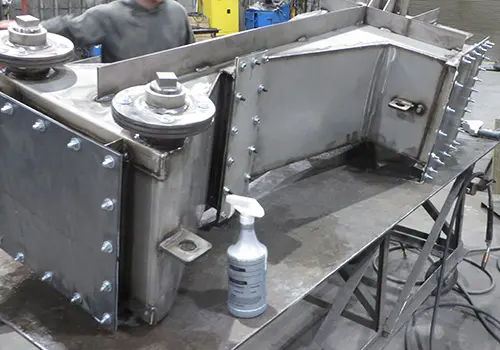
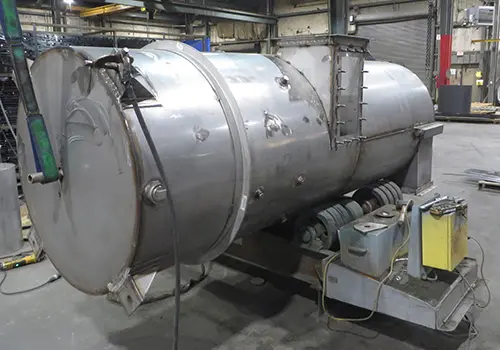
Sly engineered and fabricated a custom venturi wet scrubber system designed specifically for the spray dryer exhaust conditions. Venturi scrubbers are particularly effective in applications involving fine particulate and challenging material properties, including sticky, volatile, or hygroscopic materials.
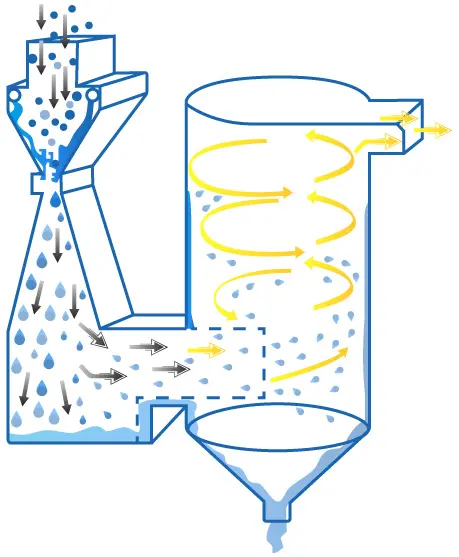
The system works by accelerating exhaust gas through a venturi throat, where it contacts scrubbing liquid at high velocity. This creates intense mixing between the droplets and airborne particles, allowing even very fine particulate to be captured and removed from the gas stream.
The wet collection approach provided several advantages:
- Effective removal of low-density particles around 5 microns
- Elimination of filter blinding associated with dry collectors
- Ability to tolerate elevated temperatures from the spray dryer
- Simultaneous particulate removal and gas absorption
Sly designed the scrubber to integrate seamlessly into the facility’s existing process while maintaining stable airflow and predictable operating conditions.
System Specifications
Contaminant
Water-soluble food flavoring particulate
Upstream Process
Spray drying
Collection Method
Venturi scrubber
Removal Efficiency
~99% for particles >5 microns
Material of Construction
10-gauge 304L stainless steel
Operating Pressure Drop
10 inches water gauge
The Results:
Reliable Emissions Control for Spray Dryer Exhaust
The custom venturi scrubber delivered immediate performance improvements and long-term operational reliability. Key results included:
- Approximately 99% particulate capture efficiency
- Reliable removal of fine flavoring particulates
- Elimination of filtration issues associated with dry collection systems
- Stable airflow conditions across the spray dryer exhaust
- Reduced particulate emissions from the manufacturing process
By switching to a wet scrubbing solution, the facility was able to control emissions while improving overall system reliability.
Why Venturi Scrubbers Work for Spray Dryer Applications
Spray dryer exhaust streams often contain fine, sticky, or hygroscopic particles that can quickly foul traditional filtration systems. Venturi scrubbers provide an effective alternative because they:
- Capture very fine particulate
- Handle sticky or condensable materials
- Operate reliably at elevated temperatures
- Combine particulate and gas-phase pollutant removal
These characteristics make venturi scrubbers well-suited for food processing applications involving flavorings, powders, and specialty ingredients.
FAQs – Venturi Scrubber for Spray Dryer Applications
Why are venturi scrubbers effective for spray dryer exhaust streams?
Venturi scrubbers are highly effective for spray dryer emissions because they capture extremely fine particulate through high-velocity gas and liquid interaction. The intense mixing inside the venturi throat allows droplets to collide with and capture particles that may bypass cyclones or overload baghouses.
When should a wet scrubber be used instead of a baghouse or cyclone?
Wet scrubbers are often preferred when the particulate is fine, sticky, hygroscopic, or water-soluble, which can cause blinding and reliability issues in dry filtration systems. They are also useful when a process involves high temperatures or requires simultaneous gas absorption.
What particle size can a venturi scrubber effectively capture?
Venturi scrubbers can capture very fine particulate, often 5 microns or smaller, depending on system design, liquid injection rate, and pressure drop.
Can a venturi scrubber handle sticky or hygroscopic materials like food flavorings?
Yes. Wet scrubbers are particularly well-suited for materials that are sticky, condensable, or hygroscopic, since the liquid-collection method prevents the buildup and filter blinding that often occur in dry dust-collection systems.
What factors determine the performance of a venturi scrubber?
Key design factors include gas velocity, pressure drop, liquid-to-gas ratio, droplet size, and venturi throat geometry. Proper engineering ensures the scrubber achieves high particulate removal efficiency while maintaining stable airflow conditions.
Why Sly?
For nearly 150 years, Sly has engineered air pollution control solutions for demanding industrial applications. From dust collectors to wet scrubbers, our team designs systems that match the realities of each process rather than forcing standard equipment into complex environments.
If your process involves fine particulate, sticky materials, or spray drying, our engineers can help identify the right air pollution control solution.