
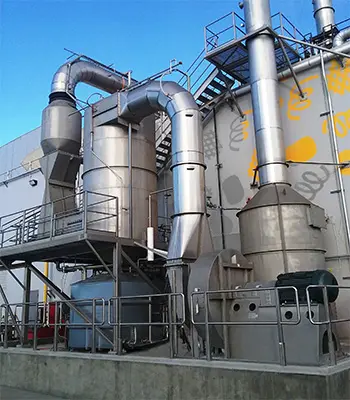
At its core, a wet scrubber is a mass transfer device. It relies on a simple physical and chemical reality: gaseous pollutants can be transferred from an exhaust stream into a liquid solvent if you create the right conditions. When dealing with corrosive fumes, this transfer is not just physical dissolution. It is paired with chemical neutralization to ensure the pollutants are permanently captured and rendered harmless.
The Core Principle of Gas Absorption and Two-Film Theory
To understand how a wet scrubber removes corrosive fumes, we must look at the gas-liquid interface. This process is governed by the Two-Film Theory. According to this engineering model, a stagnant gas film and a stagnant liquid film exist on either side of the interface between the exhaust gas and the scrubbing liquid.
For absorption to occur, the target gas molecules must diffuse through the gas film, cross the interface, and then diffuse through the liquid film to dissolve into the bulk liquid solvent. The rate of this mass transfer depends heavily on:
- The solubility of the gas in the specific liquid solvent.
- The temperature of the gas and liquid streams (lower temperatures generally favor absorption).
- The total surface area of the gas-liquid interface.
- The concentration gradient of the pollutant between the gas and liquid phases.
Chemical Neutralization and Reagent Chemistry
If you were to use pure water as your scrubbing liquid to capture highly acidic gases, the water would quickly become saturated. As the concentration of dissolved acid in the liquid rises, the concentration gradient decreases, and the mass transfer rate drops. Eventually, the scrubber stops removing the fumes.
To prevent this, we introduce chemical reagents into the scrubbing liquid. Adding an alkaline reagent, most commonly sodium hydroxide (NaOH) or potassium hydroxide (KOH), initiates an immediate chemical reaction. The reagent neutralizes the dissolved acid, converting it into a highly soluble, non-hazardous salt and water. This reaction keeps the concentration of the unreacted acid in the liquid phase at virtually zero, maintaining a steep concentration gradient that drives continuous, high-efficiency gas absorption.
This fundamental relationship between gas-liquid contact, system configuration, and absorption efficiency is thoroughly documented in EPA technical guidance in Section 5.2 Chapter 1 – Wet Scrubbers for Acid Gas.
For the most common industrial acid gases, the chemical neutralization equations are:
- Hydrochloric Acid:
HCl + NaOH -> NaCl + H2O - Hydrofluoric Acid:
HF + NaOH -> NaF + H2O - Sulfur Dioxide:
SO2 + 2NaOH -> Na2SO3 + H2O - Hydrogen Sulfide:
H2S + 2NaOH -> Na2S + 2H2O
Which Corrosive Pollutants Can Wet Scrubbers Effectively Remove?
Wet scrubbers are highly versatile systems capable of removing a wide array of corrosive and hazardous gases. The targeted pollutants generally fall into three categories:
- Mineral Acids: Hydrochloric acid (HCl), hydrofluoric acid (HF), nitric acid fumes (HNO3), and sulfuric acid mist (H2SO4).
- Alkaline Fumes: Ammonia (NH3) gas, which is typically scrubbed using an acidic solution like dilute sulfuric acid rather than an alkaline one.
- Sulfur and Halogen Compounds: Sulfur dioxide (SO2), hydrogen sulfide (H2S), and chlorine gas (Cl2).
The ease of removal is directly tied to the pollutant’s solubility. Highly soluble gases like HCl and NH3 are incredibly easy to capture, often achieving removal efficiencies between 95% and 99% or greater with relatively simple scrubber configurations. Less soluble gases require longer contact times, specialized packing, or highly targeted chemical reagents to achieve regulatory compliance. For a deeper look at managing these challenging streams, read our comprehensive guide, Don’t Get Gassed: The Ultimate Guide to Acid Gas Management.
A major advantage of wet scrubbers is their ability to handle high-temperature, high-humidity gas streams. In dry air pollution control systems like baghouses, high humidity or temperature drops can cause moisture condensation, which leads to filter blinding, caking, and rapid corrosion of metal housings. Wet scrubbers naturally cool and saturate the gas stream, eliminating condensation risks and allowing for the simultaneous removal of aerosols and corrosive vapors.
What Are the Key Design Parameters That Determine Removal Efficiency?
When we design a wet scrubber for corrosive fume control, we must carefully balance several engineering parameters to achieve the required outlet emissions limits while minimizing operating costs:
- Liquid-to-Gas (L/G) Ratio: This is the volume of scrubbing liquid introduced per unit volume of exhaust gas, typically measured in gallons per 1,000 cubic feet (gpm/1,000 cfm). For acid gas scrubbing, typical L/G ratios range from 10 to 120 gallons per 1,000 cubic feet of gas. If the L/G ratio is too low, there will not be enough liquid surface area to contact and absorb the gas. If it is too high, the system will consume excess pumping energy and may flood the scrubber vessel.
- Packing Height and Surface Area: In packed bed scrubbers, the height of the packing material directly determines the gas residence time and the available surface area for mass transfer. Standard applications use packing heights between 5 and 10 feet, while high-efficiency systems targeting highly toxic or low-solubility gases may require packing heights up to 20 feet.
- pH and Conductivity Control: To maintain neutralization efficiency, the chemistry of the recirculating liquid must be continuously managed. Automated dosing systems use pH and conductivity probes to monitor the liquid. For acid gas control, the system automatically adds fresh alkaline reagent to keep the circulation pH between 8 and 10.
- Pressure Drop: As gas flows through the packing or a restricted throat, it encounters resistance, resulting in a pressure drop (measured in inches of water column). While higher pressure drops can increase gas-liquid contact and particulate collection, they also require larger system fans and increase electrical energy consumption. Designing for the lowest pressure drop that still achieves compliance is key to controlling long-term operating costs.
What Are the Main Types of Wet Scrubbers Used for Fume Control?
Not all wet scrubbers are designed the same way. The choice of scrubber configuration depends on whether your exhaust stream contains only gaseous fumes, a mix of fumes and particulate matter, or highly variable concentrations of multiple pollutants.
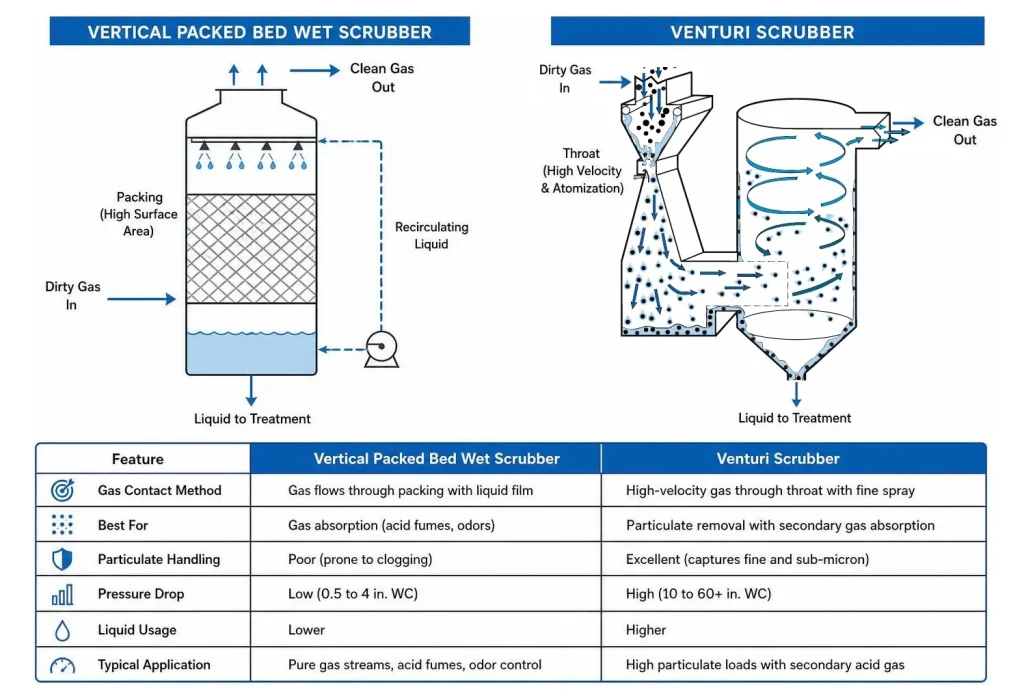
| Scrubber Type | Gas Removal Efficiency | Particulate Handling | Relative Pressure Drop | Primary Application |
|---|---|---|---|---|
| Packed Bed Scrubber | Ultra-High (>99%) | Poor (prone to clogging) | Low (0.5 to 4 in. WC) | Pure gas absorption, acid fumes, odor control |
| Venturi-Wäscher | Moderate (70% to 90%) | Excellent (sub-micron) | High (10 to 60+ in. WC) | High particulate loads with secondary acid gas |
| Multi-Stage Scrubber | Ultra-High (>99%) | Good (with upstream dry stage) | Moderate | Complex streams, lithium processing, chemical plants |
Selecting the right configuration is critical for both capital and operational efficiency, as detailed in the classic AIChE article, Consider Wet Scrubbers for Pollution Control | AIChE.
Why Are Packed Bed Scrubbers the Industry Standard for Acid Gases?
For pure gas-phase corrosive fumes, packed bed scrubbers (also known as packed towers) are the undisputed industry standard.
In a vertical counter-current packed bed scrubber, the contaminated gas enters the bottom of the vessel and flows upward. The scrubbing liquid is introduced at the top through a distributor and flows downward over a bed of loose, high-surface-area packing media. This counter-current flow pattern ensures that the cleanest gas contacts the freshest, most chemically active scrubbing liquid right before exiting the system, maximizing the mass transfer driving force.
The packing media itself is designed to provide the maximum possible surface area for gas-liquid contact while maintaining a highly open structure that minimizes pressure drop. Packing shapes (such as saddles or rings) are selected based on the specific chemistry, temperature, and flow rates of the application. Because of this optimized contact, packed towers routinely achieve gaseous removal efficiencies exceeding 99% for highly soluble inorganic fumes.
When Is a Venturi Scrubber Preferred Over a Packed Tower?
While packed towers excel at gas absorption, they have a major vulnerability: solid particulate matter. If your exhaust stream contains both corrosive fumes and fine dust, the particulate will quickly settle in the packing bed, causing clogging, channeling, and system failure.
In these scenarios, a Venturi scrubber is the preferred choice. A Venturi scrubber accelerates the gas stream to high velocities (typically 200 to 400 feet per second, or 60 to 120 meters per second) as it passes through a constricted throat. Scrubbing liquid is injected directly into this high-velocity zone, where the extreme shear forces atomize the liquid into millions of tiny droplets. These droplets collide with and capture fine particulate matter down to the sub-micron level.
While Venturi scrubbers are unmatched for particulate removal, they have limitations when it comes to gas absorption. The contact time between the gas and liquid in a Venturi throat is incredibly short (often a fraction of a second), resulting in lower gas absorption efficiencies than packed towers. Additionally, operating a Venturi requires significant fan energy to overcome the high pressure drop across the throat.
How Do Multi-Stage and Hybrid Systems Solve Complex Emission Problems?
When an industrial process generates an exhaust stream containing high concentrations of both dry particulates and corrosive acid gases, a single-stage device is rarely enough. The most effective approach is a system-level solution that combines dry and wet technologies in series.
For example, we frequently design hybrid systems where a dry dust collector (such as a Sly baghouse) is installed upstream of a packed bed wet scrubber. The baghouse captures the dry, valuable, or hazardous particulate matter first, protecting the downstream wet scrubber. The clean, particulate-free gas then enters the packed tower, where the corrosive acid gases are neutralized without any risk of fouling the packing media.
This multi-stage approach is highly effective for complex, high-risk processes like lithium production, battery recycling, and semiconductor manufacturing. It ensures complete regulatory compliance, minimizes chemical reagent consumption, and dramatically reduces maintenance downtime. To learn more about how these systems are integrated, read our detailed overview, From Fumes to Fresh Air: Understanding Wet Scrubber Technology.
How Do Materials of Construction and Maintenance Prevent Scrubber Failure?
The very chemical reactions that make wet scrubbers so effective at neutralizing acid gases also create an incredibly harsh internal environment. If a scrubber is built from the wrong materials, or if routine maintenance is neglected, the system can fail rapidly, leading to costly unscheduled downtime, safety hazards, and environmental non-compliance.
Material Selection Guidelines for Corrosive Environments
Selecting the right Material of Construction (MOC) is the single most important factor in ensuring wet scrubber longevity. Standard carbon steel and even basic stainless steels will degrade rapidly when exposed to hot, acidic exhaust streams containing chlorides or fluorides.
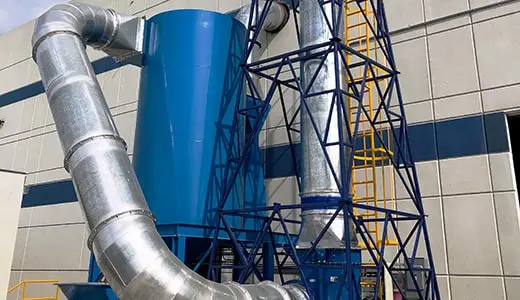
- Polypropylene (PP) and Polyvinyl Chloride (PVC): These thermoplastics offer outstanding chemical resistance to a wide range of mineral acids and alkalis. They are highly cost-effective but are limited by temperature, generally recommended only for applications operating below 140 degrees Fahrenheit (60 degrees Celsius).
- Fiberglass Reinforced Plastic (FRP): FRP is the premier material for industrial wet scrubbers. By utilizing premium vinyl ester resins, FRP vessels can withstand highly aggressive chemical environments and operating temperatures up to 220 degrees Fahrenheit (104 degrees Celsius). FRP offers an exceptional strength-to-weight ratio and can be custom-fabricated to meet precise structural and chemical requirements.
- Stainless Steel (304/316L) and Exotic Alloys: While plastic and FRP are preferred for acid service, stainless steel or exotic alloys (like Hastelloy) are used when process temperatures are exceptionally high, or when strict sanitary or Good Manufacturing Practice (GMP) standards must be met, such as in certain pharmaceutical or food processing applications.
What Maintenance Practices Ensure Long-Term Scrubber Performance?
Even a perfectly engineered scrubber will lose efficiency if it is not properly maintained. To ensure continuous compliance and prevent unexpected failures, plant operators should focus on four critical maintenance areas:
- Mist Eliminator Care: As clean gas leaves the scrubbing zone, it carries tiny entrained liquid droplets with it. Mist eliminators (such as chevron blades or mesh pads) capture these droplets to prevent them from exiting the stack as “stack rain.” If these eliminators become plugged with solids or scale, the pressure drop will rise, and liquid carryover will increase. Regular inspection and wash-down cycles are essential.
- Nozzle and Liquid Distribution Inspections: The spray nozzles must provide a uniform pattern to wet the packing bed completely. If nozzles become plugged with debris or worn down by abrasive particulates, dry spots will form in the packing. This “channeling” allows the gas to bypass the scrubbing liquid, causing a rapid drop in removal efficiency.
- Instrumentation Calibration: Wet scrubbers rely heavily on automated controls to maintain the correct chemical balance. pH sensors, conductivity probes, and differential pressure transmitters must be calibrated regularly. A drifted pH probe can lead to under-dosing of reagents, resulting in acid breakthrough and accelerated corrosion downstream.
- Liquid Management and Blowdown: As acid gases are neutralized, dissolved salts accumulate in the scrubbing liquid. If the concentration of these salts becomes too high, they will begin to precipitate, causing scale buildup on the packing and vessel walls. Implementing a controlled blowdown rate (discharging a portion of the concentrated liquid and replacing it with fresh makeup water) is critical to keeping salt concentrations below the saturation point.
How Does Sly Help Industrial Facilities Design the Right Fume Control System?
At Sly, LLC, we do not believe in one-size-fits-all solutions. Every industrial process has a unique exhaust profile, and a cookie-cutter scrubber will almost always lead to operational headaches or compliance risks.
Our engineering-first approach begins with a thorough evaluation of your process data: gas flow rates, inlet temperatures, exact chemical concentrations, particulate characteristics, and your local regulatory emission limits. Whether you need a standalone FRP packed tower for acid gas control or a custom-designed wet scrubber system integrated with a dry baghouse, our team designs and manufactures the entire system to deliver reliable, long-term performance.
If you are currently evaluating a fume control project or struggling with an existing emissions challenge, let our application specialists help you select and size the ideal system for your plant. Explore our custom engineering capabilities on the Sly Industrial Wet Scrubbers Product Page or contact us today to request a technical consultation.