
Kontrolle und Wiederverwendung von Frittieröl-Emissionen mit dem Venturi-Nasswäscher von Sly
Industry: Food Processing
Application
Commercial Frying Emissions Control
Case Study Highlights
Replaced an underperforming existing wet scrubber
Achieved greater than 99% particulate removal efficiency
Reduced unscheduled maintenance requirements
Captured waste cooking oil for potential repurposing
Designed for 20,000 ACFM gas flow
Exceeded required environmental performance

The Challenge:
Controlling Oil and Grease Emissions from Commercial Frying
A leading U.S.-based frozen food manufacturer operated a processing plant with a commercial potato fryer that used large quantities of cooking oil. The facility needed Best Available Control Technology equipment to reduce frying emissions and meet current environmental requirements. Its existing wet scrubber was underperforming and required extensive unscheduled maintenance.
Problems included:
- Waste cooking oil coated areas around exhaust stacks
- Existing scrubber struggled to meet emissions requirements
- Unscheduled maintenance affected plant performance
- Frying generated oil droplets and VOC emissions
Deep-fryer emissions included particulate matter in the form of oil droplets and volatile organic compounds created as heated oil vaporized. Emission characteristics can vary depending on the oil, operating temperature, fried product, and the fryer itself.
The Solution:
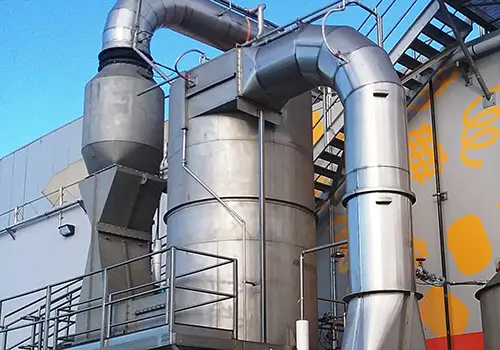
Sly No. 7 Venturi Wet Scrubber System
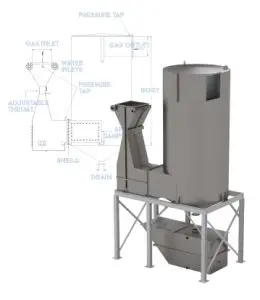
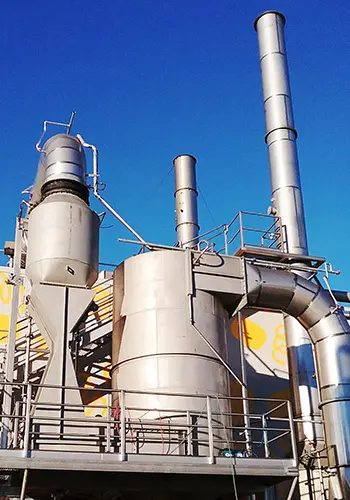
After evaluating the emissions, performance requirements, and existing equipment, Sly designed a replacement system using a No. 7 Venturi Scrubber and auxiliary equipment. The system used controlled dilution air to cool the gas stream before the Venturi, helping grease and oil behave like solid particulates for improved removal. A continuous overflow purged fouled water containing grease, batter, and potato flakes to reduce buildup.
This approach provided several advantages:
- Controlled inlet temperature supports effective particulate removal
- Continuous overflow reduces grease and solids buildup
- Adjustable throat helps optimize scrubber performance
- Mist eliminator captures condensed water and grease aerosols
A final high-efficiency mist eliminator was installed before the stack to remove condensed water vapor and grease aerosols.
System Specifications
Removal Efficiency
Greater than 99% particulate removal
Liquid Recirculation
180 gallons per minute
Construction
Type 304L stainless steel
The Results:
Improved Emissions Control with Reduced Maintenance
The installed Venturi Scrubber exceeded the facility’s environmental requirements, produced extremely low emission rates, and reduced maintenance needs to scheduled biannual shutdowns.
Key Results:
- Exceeded required environmental performance
- Achieved greater than 99% particulate removal efficiency
- Reduced maintenance to biannual scheduled downtimes
- Captured waste cooking oil for potential reuse
- Reduced oil and particulate emissions from frying
Collected waste cooking oil can potentially be repurposed for products such as biofuels after appropriate processing, providing an alternative use for material that would otherwise remain in the waste stream.
Why Sly Venturi Wet Scrubbers Work for Commercial Frying Emissions Control Applications
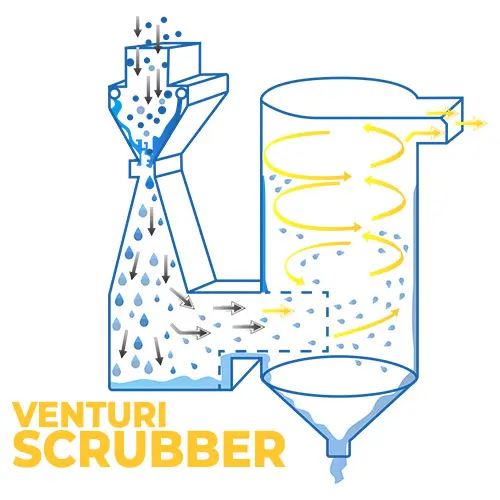
Sly Venturi Wet Scrubbers use the differential between high-velocity gases and free-flowing water to create droplets that capture contaminants and hold them in suspension. This design is suited to collecting fine particulates and mists, such as oil droplets generated during commercial frying. In this application, controlled gas-stream cooling, continuous overflow, an adjustable Venturi throat, and a high-efficiency mist eliminator addressed the characteristics of the fryer exhaust stream.
Häufig gestellte Fragen
What type of scrubber can control emissions from commercial fryers?
Venturi wet scrubbers can be used to remove fine particulates and mists from industrial gas streams. In this application, a Sly Venturi Scrubber was used to control oil droplets generated by a commercial potato fryer.
How does a Venturi scrubber remove oil mist?
A Venturi scrubber uses high-velocity gas and water to create droplets that capture contaminants. The collected material remains suspended in the liquid stream for removal from the system.
Why is temperature control important for fryer emissions?
In this application, dilution air cooled the gas stream before it entered the Venturi. This helped the grease and oils behave more like solid particulates, supporting their removal within the scrubber.
How can wet scrubbers reduce maintenance from grease buildup?
The Sly system used a continuous overflow to purge fouled water containing grease, batter, and potato flakes. This helped prevent those materials from accumulating within the system.
Can collected waste cooking oil be repurposed?
Yes. The waste cooking oil can be further processed for uses including animal feed, supplements, biodiesel, and other biofuel applications.
Why Sly?

Sly provides engineered dust-collection solutions for demanding industrial applications. TubeJet® dust collectors are built to support long filter life, efficient dust recovery, reduced maintenance, and flexible installation requirements. Custom engineering options, including HEPA integration and specialized collector configurations, help facilities optimize filtration performance and operational efficiency.